As a supplier specializing in single line lasers, I get this question at least a dozen times a day: “How well do your lasers hold up when there’s dust around, or if a little water gets on them?” It’s not just a casual curiosity either—for our customers, from construction crew chiefs tiling bathrooms to manufacturing technicians aligning assembly lines, a laser that stops working mid-job isn’t just an inconvenience. It can delay timelines, mess up measurements, and cost real money. I’ve seen it happen first-hand too: a customer last spring used a low-grade laser on a job site with heavy concrete dust, and the unit died after three hours, leaving his crew waiting for a replacement. That’s why I want to break down what “dust and water protection” actually means for single line lasers, not just the vague IP ratings you see on a spec sheet, and why it matters for your work. Single Line Lasers

First, let’s start with the basics: IP ratings, or Ingress Protection codes, are the standard industry way to tell how well a device is sealed against outside elements. They’re two numbers, right? The first covers solid particles like dust, the second covers liquids like water. For single line lasers, which are often used in environments where debris and moisture are unavoidable, these two digits are make-or-break, but there’s a lot of misinformation about what each one actually means.
The first digit, for solid protection, ranges from 0 to 6. A rating of 0 means no protection at all—so any dust or even a stray fiber of fabric can get inside. That’s basically the disposable laser you might buy at a hardware store for a quick shelf installation, and it’s never going to hold up on a job site. A rating of 5 is the most common for entry-level single line lasers from reputable suppliers like ours. That means the laser is “dust protected,” not dust-tight. The official definition is that dust can enter in small amounts, but it won’t interfere with the device’s normal operation. For most construction or light manufacturing sites, that’s enough—fine dust like drywall dust or light concrete grit won’t cause a failure, because the internal components are sealed enough to keep the laser diode and optics clear. But if you’re working in an environment with heavy, coarse dust—like a stone quarry, or a sandblasting operation—even IP5 might leave you vulnerable. For those cases, we offer lasers with IP6 dust protection, which means dust can’t get inside at all, even in dense concentrations. That’s the kind you want if you’re cutting stone on a job site where silica dust is everywhere; we’ve had customers use IP6 lasers for two weeks straight without a single issue, even when they were left out on open worksites overnight.
The second digit, for liquid protection, is where most people get confused. It also ranges from 0 to 9, but the common ratings you’ll see for single line lasers are 4, 5, or 6. A lot of folks think “IP4 means it’s fine if it rains a little,” but let’s get the exact definitions straight. IP4 is protection against splashing water from any direction—like a drizzle or a coffee spill, basically. That’s enough for a laser you’re using indoors, or even an outdoor job where it spits rain once or twice. But IP5 is water jets, not just splashes. That means a low-pressure water spray, like a hose you use to clean down a workbench, won’t hurt it. We had a carpenter last month accidentally knock his IP5 laser into a shallow puddle while he was working on a deck, and when he pulled it out and dried it off, it worked just fine. IP6, though, is high-pressure water jets, which is the rating you want if you’re pressure-washing equipment around the laser, or working in heavy rain that’s not just a drizzle. A lot of budget lasers skip the higher liquid ratings, which is why if you leave a cheap one out in a storm, it’ll die, but our IP6-rated models can handle being caught in a full downpour for up to 10 minutes without damage.
But here’s the thing: IP ratings are just a baseline. For single line lasers, there’s more to dust and water resistance than just the spec sheet. The optics, the part that actually projects the laser line, are super important. Even if the casing is sealed, if a dust particle lands on the glass lens that the laser passes through, it can block the line, make it uneven, or even make it fade. That’s why some of our higher-end single line lasers have coated optics that repel dust and water—so instead of sticking to the glass, dust falls off with a light shake, and water beads up and rolls off when it rains. We tested this last year during a construction project where the crew was working in a dusty, high-humidity area; a regular uncoated lens would have had dust caked on after a day, making the laser line unreadable, but our coated lenses stayed clear, and they only needed a quick wipe once a shift.
Another thing most people don’t know: humidity plays a big role too. It’s not just liquid water that can mess up a laser—condensation, like when you bring a cold laser from a air-conditioned truck into a hot, humid job site, can get inside the casing and fog up the optics. For that reason, all our single line lasers go through a humidity testing process before they ship, and our IP5 and IP6 models have a small vent that lets air circulate slowly, so condensation can escape without letting dust or water in. It’s a tiny feature, but it makes a huge difference for people working in places like the Southern U.S. or Southeast Asia, where humidity is high year-round.
I’ve also had customers ask me if a laser can be washed off. The short answer is: only if it has the right IP rating. An IP4 laser can handle a light wipe with a damp cloth, but don’t spray it with a hose. An IP5 or IP6? You can actually clean the casing with a hose, which is a big plus for job sites where mud or concrete splatter gets on the laser. We recommend using mild soap, not harsh chemicals, because chemicals can break down the seal over time. A lot of people make the mistake of thinking any water exposure is bad, but modern sealing technology makes it so that small, accidental splashes or even a light rinse won’t damage a quality single line laser.
But let’s be honest: no single line laser is completely indestructible. Even the highest IP6-rated model will have issues if you leave it submerged in a puddle for hours, or if you drop a brick on it (though drop protection is a whole other conversation). The key is matching the laser’s protection level to your actual work environment, not just picking the highest rating available. If you’re a tile installer working indoors, you probably don’t need an IP6 laser—IP5 is more than enough, and it’s a lower cost. But if you’re a concrete finisher working outdoors in dust and occasional rain, you’ll want at least IP5, and if you’re working in a dusty quarry or a shipyard where salt water is present, IP6 is non-negotiable.
I learned this lesson early on in my work as a laser supplier. A few years back, we had a customer who bought a low-cost IP4 laser for a job building a house. Halfway through the project, a rainstorm hit, and he left the laser in the back of his open truck overnight. The next morning, the laser wouldn’t turn on. He sent it back, frustrated, and I had to explain that an IP4 rating is for splashes, not extended exposure to rain. That’s when we started adding a guide to every product page that breaks down which IP rating is best for common jobs, and now we’ve helped thousands of customers pick the right laser for their needs, no overpaying for a rating they don’t need, no underbuying and ending up with a broken tool.
Another common misconception: “higher IP rating means the laser is more accurate.” That’s not true. The accuracy of a single line laser, the measure of how straight the line is, depends on the internal alignment of the diode and the prism, not the sealing. You can have two lasers with the same IP6 rating, and one can be accurate within 1/8 of an inch over 100 feet, and the other can be off by 1/2 an inch. The sealing just protects the accuracy from being damaged by dust or water, so if you have a well-sealed laser, its accuracy will stay consistent longer, even in tough environments. That’s why we test all our lasers for accuracy after we apply the seals—we don’t want a laser that’s well-protected but projects a crooked line.
So, how do you actually care for your single line laser to keep its dust and water protection working? A few simple tips, from someone who’s seen lasers get ruined by bad care. First, don’t leave the laser uncovered on the job site when you’re not using it. Even if it’s IP6, a heavy dust storm can blow fine dust into small gaps if it’s left out for days, and that dust can build up on the optics over time. Second, clean the lens regularly, but gently. Use a microfiber cloth, not a paper towel, because paper towels can scratch the coated lens. If there’s dried dust, a quick burst of compressed air (held a few inches away, so you don’t damage the seal) is better than wiping it. Third, if you do get water on it, dry it off as soon as you can. Even IP6 lasers can have small amounts of water seep in through vents, and while it’s designed to evaporate, leaving it wet for days can cause internal corrosion.
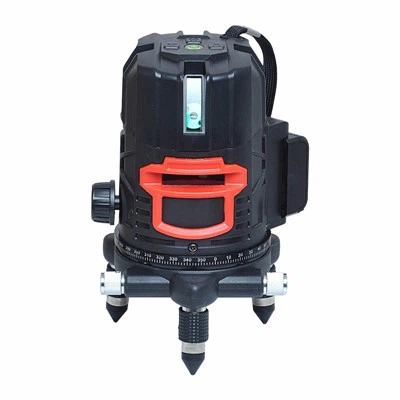
At the end of the day, the protection level of a single line laser against dust and water is about reliability. Your laser is a tool, and if it’s going to do its job, it needs to work when you need it. If you’re tired of lasers that die mid-job because of dust or a little rain, let’s talk. We can walk through your work environment, what you need the laser to do, and help you pick the right model with the right IP rating, plus all the other features that matter, like line accuracy and battery life. No one-size-fits-all, no confusing jargon, just a straight answer based on real-world use. Don’t let dust or unexpected rain derail your project—reach out, and let’s find the single line laser that works for you.
Line Laser References
- International Electrotechnical Commission (IEC) 60529: Degrees of protection provided by enclosures (IP Code)
- National Fire Protection Association (NFPA) 70: National Electrical Code, Article 409 for industrial equipment enclosures
- Laser Industry Association (LIA) Technical Note: Environmental considerations for line laser alignment tools
Nantong Jiadebao Optoelectronic Technology Co., Ltd.
Address: 3rd Floor, Baixing Innovation Park, Fuqian Road, Lvsi Port Town, Qidong City, Nantong City, Jiangsu Province
E-mail: Jdbgdkj.alex@outlook.com
WebSite: https://www.jdbgdkj.com/
