If you work in precision manufacturing, chances are you already know how critical five-axis machining centers are for producing complex aerospace, automotive, and medical parts. These machines, with their ability to rotate and tilt workpieces or tools in multiple axes, deliver the accuracy and efficiency many high-volume production lines rely on. But even the most robust five-axis systems aren’t immune to issues—and one of the most common areas where problems arise is the hydraulic system. As a supplier with decades of experience troubleshooting and equipping these machines, I’ve seen firsthand how hydraulic faults can bring a production line to a halt, costing manufacturers thousands in lost output. Let’s break down the most frequent hydraulic system faults in five-axis machining centers, what causes them, and how you can address them to keep your operations running smoothly. Five Axis Machining Center
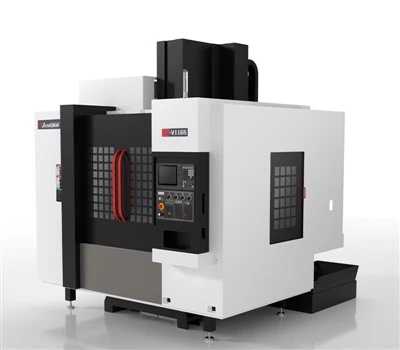
First, let’s set a quick context: the hydraulic system in a five-axis machining center is responsible for powering several key functions—clamping workpieces securely during multi-axis moves, operating tool changers, controlling the rotary and tilting axes, and managing the coolant and lubrication systems. Unlike smaller three-axis machines, five-axis setups have additional hydraulic components to support the extra axes, which means more potential points of failure. Over the years, I’ve noticed that most of these faults fall into a few distinct categories, and many stem from avoidable maintenance gaps or improper component sizing.
One of the top issues I encounter is hydraulic fluid contamination, specifically from dirt, metal shavings, or water. Think about it: a machining center’s shop floor is a dusty, metal-filed environment. Even with regular filtration, small particles can seep into the hydraulic fluid over time through worn seals, improperly filled reservoirs, or cross-contamination during fluid top-ups. In five-axis systems, this contamination is doubly problematic because many components are precision-machined for tight tolerances—think rotary table bearings or clamping cylinders that only microns apart. When a tiny metal particle gets trapped between a valve spool and its housing, it can cause a valve to stick, leading to uneven clamping pressure or a failure of the rotary axis to move smoothly. I recall a customer last year who was producing titanium aerospace brackets; their hydraulic system had 10 microns of metal shavings in the fluid, which caused the rotary C-axis to stall mid-machining a part. The result? A scrapped part, 12 hours of downtime, and hundreds of dollars in rework. Water contamination is another silent culprit—it breaks down hydraulic fluid’s additives, leading to corrosion of internal components. In humid environments, even condensation from the reservoir’s breathers can introduce water, so monitoring fluid moisture levels is just as important as checking for particle count.
Next on the list is leaking hydraulic fluid. Leaks are so common in these systems that I’d guess 60% of the service calls I receive relate to some form of fluid leakage. But not all leaks are equal; they can come from several sources. Worn seals are the most frequent cause—hydraulic cylinders, valve stems, and fittings rely on rubber or polymer seals to contain fluid, and over time, high pressure from the system (which can reach 1,000 to 3,000 PSI for five-axis machines) causes these seals to degrade. Another common leak point is the hose connections; constant vibration from the machine’s operation, combined with temperature fluctuations, can loosen fittings or cause hoses to crack at the crimped ends. The problem with leaks isn’t just wasted fluid—it’s also the risk of low system pressure, which can lead to improper clamping. For a five-axis machine, where a workpiece shifting even a fraction of a millimeter during a cut can ruin a part, that’s a major risk. I’ve also seen leaks go undetected for weeks in some cases, as small seepage onto the shop floor blends in with coolant. That’s why regular visual inspections of hoses, fittings, and cylinder rods are non-negotiable—at a minimum, once a shift.
Another frequent fault is incorrect hydraulic pressure. Five-axis machines require consistent, precise pressure for both clamping and axis movement. If the pressure drops below the manufacturer’s recommended level, workpieces may not be held tightly enough, leading to chatter or part misalignment. Conversely, pressure that’s too high can damage seals, cause valve failure, or even bend the axis drive components. What causes pressure issues? Often, it’s a faulty pressure relief valve. This valve is designed to regulate maximum system pressure, but over time, it can become stuck or misadjusted. I had a medical device manufacturer reach out to me last year; their hydraulic system’s pressure relief valve was stuck at 3,500 PSI (15% above the spec for their machine), which led to two broken tool holders and a damaged rotary table bearing. Sometimes, pressure issues also come from a clogged filter. A dirty filter restricts fluid flow, causing the pump to work harder and leading to pressure drops or spikes. It’s a simple fix—replacing filters every 500 to 1,000 operating hours—but many manufacturers overlook this routine step, leading to avoidable pressure problems.
Then there’s the issue of axis misalignment caused by hydraulic drive failures. In five-axis machining, the rotary (A, B, or C) axes rely on hydraulic motors and actuators to position the workpiece or tool correctly. If the hydraulic motor isn’t delivering consistent torque, or if the actuator has a leak, the axis will not align properly, leading to dimensional errors in finished parts. For example, if the B-axis (tilt axis) on a five-axis mill is not moving to the exact 45-degree angle programmed, the machined surface will be off, resulting in a part that doesn’t meet aerospace or medical industry tolerances. I’ve seen this happen when a hydraulic actuator’s internal seals are worn, causing it to extend only 90% of its required stroke. The fix isn’t always expensive—often, it’s a seal replacement, but if left unaddressed, it can lead to a costly axis repair or even a full component replacement.
One less obvious but equally damaging fault is overheating of the hydraulic system. Hydraulic fluid has an optimal operating temperature, usually between 40°C and 55°C (104°F and 131°F). When the system runs too hot, the fluid’s viscosity drops, reducing its ability to lubricate components and transmit pressure. This leads to increased wear on pumps, valves, and cylinders, and can cause seals to fail prematurely. What causes overheating? Common culprits include a faulty cooling fan or a clogged heat exchanger, which prevents the system from dissipating heat. I remember a customer who ran their machining center 24/7 without cleaning the heat exchanger; after six months, the heat exchanger was covered in metal shavings and coolant residue, so the hydraulic system temperature jumped to 70°C. The result was a $20,000 repair bill for a seized hydraulic pump, plus three days of downtime. Another cause of overheating is an undersized hydraulic system—some manufacturers cut corners on pump size to reduce initial costs, but that leads to the system working overtime, generating excess heat.
Now, let’s talk about what sets five-axis machine hydraulic systems apart from three-axis setups: they have more hydraulic components for the extra axes, which means more potential failure points. For example, a three-axis machine might have a single clamping cylinder, but a five-axis machine can have four or five clamping points (for multiple workpieces or fixtures) plus separate actuators for the rotary and tilt axes. That means more seals, more valves, and more hoses to maintain. Also, the tight tolerances required for five-axis machining mean that even minor hydraulic faults (like a 5 PSI pressure drop or a 1mm seal leak) can have a disproportionate impact on part quality.
So, what can you do to prevent these faults? From my experience as a supplier, proactive maintenance is the best defense. Here’s a checklist I recommend for every five-axis machining center: first, test hydraulic fluid regularly—particle count, moisture level, and viscosity should be checked at least every three months, or after 500 operating hours. Second, replace filters and seals on schedule; don’t wait for a leak or valve failure to address them. Third, monitor system pressure and temperature daily using the machine’s built-in gauges, and perform a full pressure test every six months. Fourth, keep the hydraulic reservoir clean—make sure breathers are fitted with filters, and avoid introducing foreign material during fluid top-ups. Finally, train your operators to spot early warning signs: unusual noises from the hydraulic pump, slow axis movement, or visible leaks. Catching a problem early can save you thousands in downtime and repairs.
If you’re in the market for a new five-axis machining center, choosing a supplier with experience in hydraulic system design is key. Poorly sized or improperly configured hydraulic systems are a common issue with cheaper machines, which leads to more downtime and higher long-term costs. At our company, we engineer our hydraulic systems specifically for five-axis applications, using components rated for heavy-duty use and building in redundancy for critical functions like workpiece clamping. We also offer ongoing support and maintenance training to our customers, to help them avoid the faults I’ve outlined here.
When a hydraulic fault does occur, it’s important to address it quickly—delaying repairs can lead to secondary issues, like damage to the machine’s precision axes or scrapped parts. For example, a stuck valve that causes uneven clamping can put excess stress on the rotary table, leading to bearing wear that’s far more expensive to fix than the initial valve replacement.
I’ve seen too many manufacturers lose money because they overlook the hydraulic system in their five-axis machining centers. It’s easy to focus on the spindle, tools, or control system, but the hydraulic system is the backbone that powers all the machine’s critical functions. By understanding the common faults—contamination, leaks, pressure issues, axis drive failures, and overheating—and implementing a proactive maintenance plan, you can minimize downtime, extend the life of your machine, and ensure consistent, high-quality parts.
If you’re experiencing hydraulic issues with your five-axis machining center, or if you’re looking to invest in a new machine with a reliable hydraulic system, don’t wait to connect. Our team has the expertise to diagnose problems, perform repairs, and provide the custom solutions you need to keep your operations running smoothly. Let’s work together to resolve your hydraulic challenges and optimize your machining performance.
Horizontal Machining Centers References
- Hydraulic Systems for Machine Tools: Design, Maintenance, and Troubleshooting. Industrial Press, 2021.
- Five-Axis Machining: Principles and Applications. SME (Society of Manufacturing Engineers), 2019.
- Hydraulic Fluid Contamination Control Guidelines. International Organization for Standardization (ISO) 4406:2017.
- Machine Tool Hydraulics: Troubleshooting Best Practices. Machinery’s Handbook, 31st Edition, Industrial Press, 2020.
- Maintenance Strategies for Precision Machining Centers. Journal of Manufacturing Engineering, Vol. 18, No. 3, 2022.
Guangdong Taiji Intelligent Equipment Co., Ltd.
With abundant experience, we are one of the most professional five axis machining center manufacturers and suppliers in China. Please feel free to buy cheap five axis machining center for sale here from our factory. For price consultation, contact us.
Address: Room 107, Building 15, No. 911 Jian’an Road, Chang’an Town, Dongguan City, Guangdong Province
E-mail: sale@gdtaijicnc.com
WebSite: https://www.gdtaijicnc.com/
