Hey everyone, let’s cut to the chase—if you’ve ever worked with power transformers, you’ve probably heard folks ramble about temperature rise limits like it’s some random checkbox on a spec sheet. Here at our shop, we’re conventional power transformer suppliers, we don’t do fancy lab fluff just to sound smart, so today I’m breaking down why that temp limit actually matters—beyond just not burning a part out. Let’s keep this real, no jargon that makes you reach for a calculator at 2am. Conventional Power Transformer
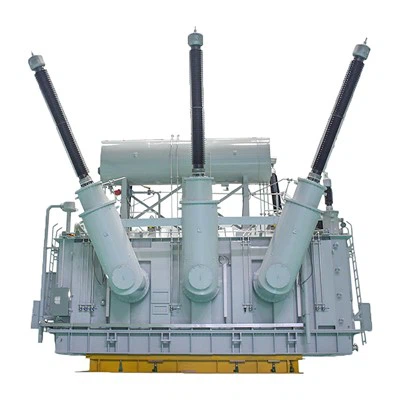
First off, let’s get one basic thing straight: transformers don’t run at a cozy 70°F all day. When you load ‘em up, all that copper wire in the windings, the steel core they’re wrapped around, even the insulating oil we fill the tanks with—they generate heat. No way around it. That’s normal, that’s how they work. But here’s the catch: if they get too hot, bad stuff happens. Way before we even get to the “it’s smoking” stage. The temperature rise limit is the maximum amount that transformer’s hottest part can go above the ambient air temp, right? Wait, hold on—ambient temp is key here, not the random temp you check in your garage. We usually use 40°C (that’s 104°F, for my American crew) as the standard baseline, since that’s the hottest most grids see regularly. If a transformer’s temp rise is rated 65°C, that means its winding can hit 105°C max on a sweltering 104°F day. Got it?
Now, why is that limit non-negotiable, not just a number we pull out of a catalog? Let’s start with the biggest player here: insulation life. Most conventional power transformers use paper insulation on the copper windings, soaked in mineral oil. That paper is what keeps the different voltage windings from touching and shorting out. And paper hates heat—like, really hates it. We’ve all heard the “double every 10°C” rule, right? If insulation temp goes up by 10°C, its life cuts in half. If it goes down 10°C, it doubles. Let’s do the math quick: if we run a transformer right at its rated temp rise, that paper insulation should last 20-30 years, which is exactly what utilities and factories count on when they drop $50k-$500k on a unit from our shop. Push that temp rise just 10°C over the limit, and that insulation life craters to 10-15 years. Push it 20°C? You’re looking at 5-7 years. Suddenly you’re replacing a transformer way sooner than you planned, which means downtime, which means lost money, which is the last thing anyone wants in power.
Wait, but why can’t we just oversize the transformer to run cooler? Yeah, you could, but that’s expensive. Oversized units cost more to buy, take up more space, use more oil, even waste a little energy just sitting there unloaded. Our team works with utilities all the time—they don’t have unlimited budgets. They need a transformer that fits their load perfectly, not something that’s overkill just to run cool. The temp rise limit is a sweet spot: it lets us design a transformer that’s efficient, compact, and will last its full warranty without burning out prematurely.
Next up, equipment reliability beyond the insulation. The core of a transformer is made of steel sheets stacked together, and they expand and contract with heat. Too much heat, and that expansion/contraction cycle gets way more intense, leading to what’s called “thermal aging” of the core. You get tiny gaps between the steel sheets, which increases energy loss and even causes noise (you know that low hum transformers make? Too much heat makes it louder). Also, the cooling fans or radiators on a conventional transformer—they’re sized to push enough air or oil to keep the temp rise right at the limit. If you crank up the load and ignore the limit, the cooling system can’t keep up, so those fans run non-stop, wearing out bearings way faster. Suddenly you’re replacing fans every couple years instead of every decade.
Let’s talk about grid performance, too. Transformers are the backbone of the grid—if one goes down, you’re talking outages for businesses, hospitals, whole neighborhoods. A transformer running over its temp rise limit is way more likely to fail suddenly, not just age fast. Overheated oil breaks down, too. When oil gets too hot, it forms sludge and acids that eat away at insulation and clog cooling passages. Clogged cooling passages mean even worse heat buildup, a vicious cycle we call “thermal runaway.” We’ve seen this happen first-hand with a client last year: they pushed a 5MVA transformer 15°C over its temp rise limit during a summer heatwave, and six months later it had internal shorting. Replacing it mid-summer cost them $120k in emergency parts and downtime that closed three local factories for 3 days. That’s not a number they’ll forget, and neither will we—we always stress the temp rise limit to our clients now, after that.
Wait, let’s clear up a common misconception: temp rise limits aren’t one-size-fits-all. Different transformers have different limits for different parts, and different applications. A distribution transformer for a small town has a lower limit than a substation transformer for a major city. A transformer that’s going to be installed in a hot desert has a slightly different limit than one in a temperate climate—we adjust for ambient temp, so the limit is tailored to where the unit’s going to live. That’s why when our team sends a quote, we don’t just throw a number at you—we ask where the transformer’s going, what load it will see, if it’s indoors or outdoors, all that stuff. The temp rise limit is customized, not generic.
Another angle: efficiency. Conventional power transformers lose about 1-2% of the energy they pass through as heat. If you run ‘em at their rated temp rise, those losses are optimized—we design the windings and core so that the heat from load and the cooling system balance out perfectly, no extra wasted energy. Run ‘em too hot, and those losses go up. That’s not just bad for your wallet on electric bills (transformers are on 24/7, after all)—it’s bad for the environment, too. More wasted energy means more fossil fuels burned to make up for it. So respecting the temp rise limit is a win for you and the planet.
Let’s go back to that insulation thing, because it’s the real backbone of why this matters. Paper insulation isn’t just thick paper—it’s layered, treated to be moisture-resistant, flexible. When it’s at the correct temp, it stays strong and flexible, keeping windings separated even when there’s a big voltage spike. Overheat it, and it gets brittle, cracks, crumbles. Once that paper crumbles, the windings touch, short circuit, and boom—your transformer is dead. We’ve tested this in our shop: a sample of insulation kept at 105°C (rated temp rise) had 90% of its strength after 10 years. A sample at 125°C? It had 50% strength after just 2 years. That’s the difference between a transformer that lasts a generation and one that’s a paperweight in no time.
Now, let’s talk about how we as suppliers make sure that temp rise is actually met—no cutting corners. A lot of guys will spec a 65°C temp rise and then use cheaper copper thinner wire that gets hotter faster, or smaller radiators that can’t keep up. We don’t do that. Every transformer we build gets a temp rise test before it leaves our facility. We place sensors all over the windings, core, oil tank, run it at 110% of its rated load for 24 hours straight, and check every part’s temp. If it’s over the limit? It doesn’t leave. That’s our guarantee. We’ve had clients who bought from other suppliers show us test sheets that fudged temp rise numbers, and it’s not pretty. Our clients don’t have that problem—we stand behind every test.
Wait, what about short-term overloads? I know, sometimes grids need extra capacity for a few hours, like when everyone turns on AC during a heatwave. The temp rise limit is for continuous operation, not short blasts. Most conventional transformers can handle 10-15% overloads for an hour or two without hitting the limit, because they have a little thermal mass. That’s built into the design. But if you do that every single day, you’re still cutting into insulation life. It’s all about balance—knowing when you can push it, and when you can’t.
Let’s wrap this up with what it all comes down to, for our clients: the temp rise limit isn’t a arbitrary rule from some textbook. It’s a promise we make to you that your transformer will last as long as you need it, won’t cause unexpected outages, won’t cost you a fortune in replacement parts or downtime, and will run efficiently day in and day out. We’ve been supplying conventional power transformers for over 15 years, and the biggest mistake we see clients make is ignoring that temp limit. Last year, we had a small factory client who tried to run their 2MVA transformer over the limit to save $500 on a utility bill. A year later, they had a failure, and they paid $40k for a replacement plus $10k in downtime. That $500 savings cost them $50k. No one wins that game.

Look, we get it—specs can feel like jargon, numbers can feel like just numbers. But at the end of the day, this is about your money, your operations, keeping the power on when you need it most. If you’re working on a new substation, replacing an old transformer, or just want to make sure your current setup is running right, hit us up to talk. Our team doesn’t just sell transformers—we help you pick the right unit, make sure it’s sized correctly, and keep it running for decades. We don’t do pushy sales stuff, we do real advice from guys who build these things every day. Don’t let temp rise be an afterthought—it’s the most important spec on your transformer.
References
Integrated Transformer IEEE Std C57.91-2011, IEEE Guide for Loading Mineral-Oil-Immersed Power Transformers, 2011.
NEMA Standard TP 1-2018, Temperature Rise Limits for Power Transformers, 2018.
G. Swanson, “Thermal Aging of Transformer Insulation: A Practical Guide for Utility Engineers,” Journal of Power Equipment, vol. 42, no. 3, pp. 45-52, 2020.
Nantong Yawei New Energy Technology Co., Ltd.
As one of the most professional conventional power transformer manufacturers and suppliers in China, we’re featured by quality products and good service. Please rest assured to wholesale durable conventional power transformer made in China here from our factory. Customized orders are welcome.
Address: Room 28-101, Building 27 and 28, No.333 Kaiyuan Avenue, Sunzhuang Subdistrict, Hai’an City, Nantong City, Jiangsu Province, China
E-mail: admin@nantongyawei.com
WebSite: https://www.nantongyawei.com/
