Hey there! I’m a supplier of fan impellers, and I’ve seen firsthand how crucial it is to pick the right fan impeller for a specific application. It’s not just about slapping any old impeller onto a fan and calling it a day. The wrong choice can lead to inefficiency, increased energy costs, and even equipment failure. So, let’s dive into how you can choose the perfect fan impeller for your needs. Fan Impeller
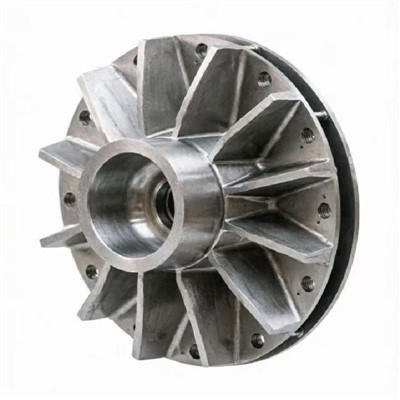
Understanding Your Application
First things first, you gotta understand the ins and outs of your application. What kind of environment is the fan going to be operating in? Is it a clean, dry space, or is it a dirty, humid area? For example, if you’re using the fan in a manufacturing plant where there’s a lot of dust and debris, you’ll need an impeller that’s designed to handle that kind of environment.
Another important factor is the airflow requirements. How much air do you need to move? This is usually measured in cubic feet per minute (CFM). You can figure this out by looking at the size of the space you need to ventilate or the cooling requirements of the equipment you’re using. If you’re cooling a small server room, you won’t need as much airflow as you would for a large industrial warehouse.
Types of Fan Impellers
There are several different types of fan impellers out there, and each one has its own strengths and weaknesses.
Axial Impellers
Axial impellers are the most common type of impeller. They’re simple, efficient, and relatively cheap. They work by moving air parallel to the shaft of the fan. You’ll often find axial impellers in things like computer fans, exhaust fans, and HVAC systems.
The blades on an axial impeller can be either straight or curved. Straight blades are better for low-pressure applications, while curved blades are more efficient at high pressures. If you need to move a large volume of air at a low pressure, an axial impeller with straight blades might be the way to go.
Centrifugal Impellers
Centrifugal impellers are a bit more complex than axial impellers. They work by taking in air at the center of the impeller and then throwing it outwards at a 90-degree angle to the shaft. This makes them great for applications where you need to generate high pressures.
You’ll find centrifugal impellers in things like blowers, vacuum cleaners, and industrial ventilation systems. They come in different shapes and sizes, including forward-curved, backward-curved, and radial blades. Forward-curved blades are good for low-pressure, high-volume applications, while backward-curved blades are more efficient at high pressures.
Cross-Flow Impellers
Cross-flow impellers are less common than axial and centrifugal impellers, but they have their own unique applications. They work by taking in air at one side of the impeller and then blowing it out the other side in a crosswise direction.
Cross-flow impellers are often used in applications where you need a long, narrow stream of air, like in air conditioning units and some types of fans. They’re not as efficient as axial or centrifugal impellers, but they can be a good choice for specific applications.
Material Selection
The material of the fan impeller is also an important consideration. Different materials have different properties, and you need to choose one that’s suitable for your application.
Plastic Impellers
Plastic impellers are lightweight, cheap, and easy to mold into different shapes. They’re a good choice for applications where you don’t need a lot of strength or durability. You’ll often find plastic impellers in things like computer fans and small household fans.
However, plastic impellers can be prone to cracking and warping if they’re exposed to high temperatures or harsh chemicals. So, if your application involves these kinds of conditions, you might want to consider a different material.
Aluminum Impellers
Aluminum impellers are lightweight, strong, and corrosion-resistant. They’re a good choice for applications where you need a balance between strength and weight. You’ll often find aluminum impellers in things like automotive radiators and some industrial fans.
Aluminum impellers can be a bit more expensive than plastic impellers, but they offer better performance and durability in the long run.
Steel Impellers
Steel impellers are the strongest and most durable type of impeller. They’re a good choice for applications where you need a lot of strength and durability, like in heavy-duty industrial fans and blowers.
However, steel impellers are also the heaviest and most expensive type of impeller. They can also be prone to corrosion if they’re not properly coated or treated.
Size and Shape
The size and shape of the fan impeller are also important factors to consider. The size of the impeller will determine how much air it can move, while the shape will affect its efficiency and performance.
In general, larger impellers can move more air than smaller impellers. However, they also require more power to operate. So, you need to find the right balance between size and power consumption.
The shape of the impeller can also have a big impact on its performance. For example, an impeller with a round shape can be more efficient than an impeller with a square shape. This is because the round shape allows the air to flow more smoothly around the impeller.
Efficiency and Performance
Efficiency and performance are two of the most important factors to consider when choosing a fan impeller. You want to choose an impeller that can move the most air with the least amount of power.
To measure the efficiency of a fan impeller, you can look at its static efficiency and its total efficiency. Static efficiency is a measure of how well the impeller can convert the power it consumes into static pressure. Total efficiency is a measure of how well the impeller can convert the power it consumes into both static pressure and airflow.
You can also look at the performance curve of the fan impeller. The performance curve shows the relationship between the airflow, static pressure, and power consumption of the impeller. By looking at the performance curve, you can see how the impeller will perform under different conditions.
Noise Level
Noise level is another important factor to consider, especially if the fan is going to be used in a quiet environment. Some fan impellers can be quite noisy, especially if they’re operating at high speeds.
To reduce the noise level of the fan impeller, you can choose an impeller that’s designed to be quiet. This might involve using a larger impeller with a lower speed, or using an impeller with special noise-reducing features.
Maintenance and Durability
Finally, you need to consider the maintenance and durability of the fan impeller. You want to choose an impeller that’s easy to maintain and that will last a long time.

Some impellers require more maintenance than others. For example, impellers that are used in dirty environments might need to be cleaned more often to prevent clogging. You also need to consider the durability of the impeller. If the impeller is going to be used in a harsh environment, you’ll need to choose a material that’s resistant to corrosion and wear.
Pump Impeller So, there you have it! Choosing the right fan impeller for a specific application isn’t always easy, but by considering these factors, you can make an informed decision. If you have any questions or need help choosing the right impeller for your application, don’t hesitate to reach out. We’re here to help you find the perfect solution for your needs.
References
- Fan Engineering Handbook
- ASHRAE Handbook of HVAC Systems and Equipment
Shandong Shunye Stainless Steel Co., Ltd.
Shandong Shunye Stainless Steel Co., Ltd. is one of the most professional fan impeller manufacturers and suppliers in China, also supports customized service. Welcome to buy bulk cheap fan impeller made in China here and get quotation from our factory. For price consultation, contact us.
Address: Shandong Province, Binzhou City, Wudi County, Liubao Town, Zhangdong Road, Duliucun Village
E-mail: sales@wdshunye.com
WebSite: https://www.shunyecasting.com/
