If you’re someone who works with heavy machinery, mining equipment, or industrial processing systems, you know how critical even the smallest component is to keeping operations running smoothly. Last month, a regular client of mine—who runs a mid-sized aggregate operation in the Midwest—called me in a panic. Their primary jaw crusher’s bimetal side plates had worn out ahead of schedule, and the standard off-the-shelf replacements they’d ordered from a big-box industrial supplier were too thick in some areas and too thin in others, causing uneven wear that threw off the entire crusher’s alignment. “We can’t afford to shut down for another week waiting for a custom part,” he’d said, and for a second I understood exactly where he was coming from. That call led to a conversation I have almost weekly with buyers like him: can bimetal side plates actually be customized, or are they one-size-fits-all components that we just have to work with? As a bimetal side plate supplier who’s been in this game for 12 years, I’m here to tell you that yes, customization isn’t just possible—it’s often the only way to get parts that work for your specific operation, not the generic parts that work for everyone else. Bimetal Side Plates
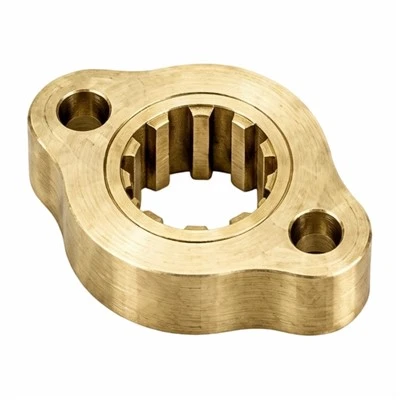
First, let’s get clear on what bimetal side plates are, because that’s where a lot of the confusion starts. Unlike monometal plates made from a single steel alloy, bimetal side plates are made by fusing two distinct metal layers together through a controlled metallurgical process: one layer is typically a tough, high-carbon steel that handles the heavy impact and abrasion from ore, rock, or aggregate being processed, and the other is a thinner layer of more flexible steel that bonds securely to the crusher’s side frame. That fusion is what makes bimetal plates so durable—they don’t delaminate like parts that are just bolted on with different materials, and they resist cracking even under repeated heavy loads. But that same dual-layer structure is also what makes customization feasible, because we don’t have to stick to a single set of dimensions or metal grades for every job.
When a customer asks about custom bimetal side plates, the first thing we walk them through is the assessment process. This isn’t just pulling a number out of thin air—we start with on-site data collection, or at least detailed blueprints and operational specs, because every crusher and every processing environment is different. For example, a quarry that processes granite, which is extremely abrasive, needs a different metal hardness than a recycling plant that handles crushed concrete mixed with metal rebar. A jaw crusher that runs 24/7 for three months straight during peak harvest season (for a grain processing operation, say) has different stress points than a crusher that’s only used during quarterly maintenance cycles. Last year, I worked with a construction company that processes recycled asphalt; their standard bimetal plates were wearing out in six weeks because the asphalt’s sharp, angular pieces created gouging wear that generic plates couldn’t handle. We adjusted the hardness of the impact layer from 52 HRC (Rockwell hardness) to 58 HRC, and added a 10-millimeter thick wear strip along the lower edge where the rock makes first contact. That simple customization extended the plate’s life to 14 weeks, and they haven’t gone back to off-the-shelf parts since.
Another common customization request is dimensional adjustment, and here’s where a lot of less experienced suppliers fall short. Standard bimetal side plates are made to fit the most common crusher models, like the 3055 jaw crusher or the 4248 cone crusher, but not every machine is an exact copy of that model. Maybe your crusher has a slightly modified frame from a last-minute repair five years ago, or you’ve added a automation system that shifted the side plate’s mounting points, or you run a secondary crusher that’s a custom build from a small manufacturer that doesn’t keep standard part specs. Last year, a customer from a mine in Wyoming contacted us because their crusher’s side plates kept rubbing against the rotating jaw, causing excessive vibration that damaged the drive shaft. The standard plates they ordered were 2 millimeters too wide, and the supplier wouldn’t do anything about it because it “fit the model number.” We took their crusher’s frame measurements, adjusted the side plate’s width by shaving 1.5 millimeters from the non-wear layer, and kept the impact layer’s full thickness to maintain durability. That fixed the vibration issue immediately, and they saved thousands in unplanned maintenance costs.
Wait, you might be thinking—if customization is so great, why do some suppliers push standard parts? The honest answer is that mass-produced parts are cheaper to make and faster to ship, and not every operation has the specific needs that demand customization. But for operations that rely on uptime, the small extra cost of a custom bimetal side plate pays for itself in reduced downtime and fewer part replacements. I’ve seen customers try to cut corners by modifying standard plates themselves—grinding down the edges, welding on extra metal, cutting them to size with a torch—and that almost always ends in disaster. Welding changes the metallurgical structure of the bimetal layers, causing delamination, and rough cutting can create sharp edges that weaken the plate or cause uneven wear. Custom plates made by a reliable supplier, on the other hand, undergo the same quality control checks as standard parts: we test the bond between the two metal layers, check the hardness of the wear surface, and verify dimensional accuracy with CNC machining to within 0.1 millimeters. That precision is why our custom plates don’t have the same failure points as modified standard parts.
Let’s talk about the different types of customization we offer, because it’s not just changing size or hardness. One of the most popular custom options is wear pattern profiling. If you notice that your side plates are wearing down more on the left side than the right, or along the top edge instead of the bottom, we can adjust the thickness of the wear layer in specific areas to match that wear pattern. For example, if a crusher’s feed chute is angled so that 70% of the material hits the lower half of the side plate, we can make the lower 300 millimeters of the wear layer 20% thicker than the upper section. That way, the plate wears evenly, instead of developing a deep groove that requires full replacement after a few months. Last year, a customer in Saskatchewan noticed this exact issue, and their modified custom plates cut their replacement frequency by 40%. Another option is custom mounting holes: some operations need larger holes for heavy-duty bolts, or offset holes to match a modified frame, or even threaded inserts for easier installation. We also offer custom material combinations for extreme environments—for coastal mines that deal with saltwater corrosion, we can pair a high-abrasion impact layer with a corrosion-resistant steel base layer, instead of the standard carbon steel base that’s more prone to rust.
I should also address a common misconception: many people think custom parts have long lead times, but that’s not always the case. When I started in this business 12 years ago, custom bimetal plates took 4-6 weeks to make, because we had to set up new production runs for each order. But with modern CNC machining and continuous fusion processes, we can now deliver most custom orders in 10-14 business days—just a few days longer than standard parts, and way faster than waiting for a supplier to retool for a one-off part. We keep a library of common crusher model specs on hand, so if you need a custom plate for a 3055 jaw crusher with a 2-millimeter width adjustment, we don’t have to start from scratch—we just pull the base design and tweak the variables. That’s another reason it pays to work with a supplier that specializes in bimetal parts, not a general industrial supplier that treats custom orders as an afterthought.
Let me share another story to make this real. A few months back, I got a call from a small construction company that does roadwork in Texas. They have a portable crusher that they move to different job sites every week, so weight is a big concern—extra weight on the crusher means more fuel costs to haul it, and more stress on the frame during transport. Their standard bimetal side plates weighed 120 pounds each, but they only needed the full thickness of the wear layer in the middle 60% of the plate. We designed a custom plate that tapered the wear layer thickness from 25 millimeters in the center to 10 millimeters at the top and bottom edges, which cut the plate’s weight by 22 pounds per unit—no loss of durability, because the thinnest areas were in spots where the material doesn’t make contact during normal operation. That saved them about $150 per haul in fuel costs, and they’ve ordered custom plates for all three of their portable crushers since then. This is the kind of customization that only makes sense when you work with a supplier who understands not just metallurgy, but the day-to-day pain points of their customers.
Of course, customization isn’t right for every operation. If you run a small operation that uses a single standard crusher model, and your processing environment is consistent, off-the-shelf bimetal side plates will work just fine, and they’re more cost-effective. But if you’re dealing with unique crusher modifications, extreme material conditions, uneven wear, or constraints like weight or mounting points, customization isn’t a luxury—it’s a way to protect your bottom line. The key is to partner with a supplier that doesn’t push you into buying a custom part you don’t need, but also doesn’t tell you that a custom part is impossible when it’s exactly what you need.
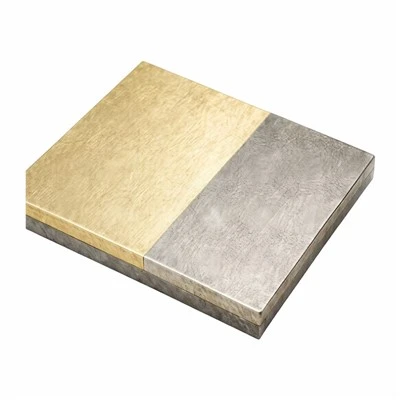
If you’re currently dealing with side plate wear issues, unplanned downtime from ill-fitting parts, or just wondering if there’s a better way to get parts that work for your operation, I’d encourage you to reach out. Whether you’re a small quarry with one crusher or a large mining operation with dozens of units, we can walk through your specific needs, answer any questions about customization, and put together a solution that keeps your equipment running smoothly without breaking the bank. Don’t wait until your next side plate fails and you’re scrambling to find a replacement—reach out today to discuss your bimetal side plate requirements and start finding a custom solution tailored to your operation.
Bimetal Strips & Sheets References:
- ASTM A531/A531M-20, Standard Specification for Heat-Resistant Chromium-Nickel Alloy Plate, Sheet, and Strip
- "Wear Resistance of Bimetallic Steel Composites for Mining Equipment," Journal of Materials Engineering and Performance, Vol. 28, No. 10, 2019
- Crusher Component Performance Report, National Aggregates Association, 2022
Qingzhou Baiyun Anti-friction Products Co., Ltd.
With abundant experience, we are one of the most professional bimetal side plates manufacturers and suppliers in China. Please rest assured to wholesale customized bimetal side plates at competitive price from our factory. Welcome to contact us for quotation.
Address: Linglongshan North Road (south of the railway bridge), Economic Development Zone, Qingzhou City, Weifang City, Shandong Province
E-mail: byantifriction@gmail.com
WebSite: https://www.baiyunbimetal.com/
