If you’ve ever worked with polyester polyols, you know they’re the unsung workhorses of countless manufacturing processes—from flexible foams for furniture and bedding to rigid foams for insulation, coatings, and adhesives. As a supplier of Polyester Polyol EG Series, I’ve spent the better part of a decade troubleshooting, testing, and refining how these materials behave in real-world conditions, and one factor that pops up more often than you might think? Humidity. It’s not just a minor annoyance; it can drastically shift how the EG Series performs, and I’ve seen firsthand how misjudging it can derail even the most well-planned production runs. Polyester Polyol EG Series
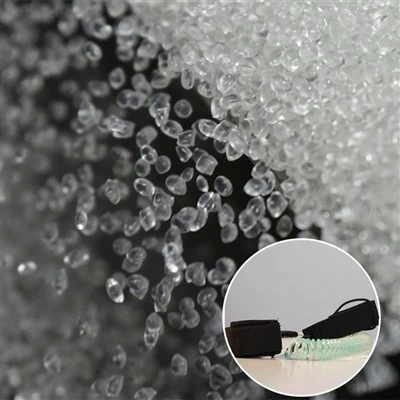
Let’s start with the basics: what is the Polyester Polyol EG Series, anyway? These are linear polyester polyols synthesized from ethylene glycol (EG) and dicarboxylic acids, usually adipic acid or phthalic anhydride, designed for high reactivity, consistent molecular weight, and excellent mechanical properties in end products. Unlike some generic polyols, our EG Series is formulated with tailored hydroxyl numbers and acid values to meet specific needs—whether that’s low-density flexible foams for mattresses or high-strength coatings for industrial machinery. But here’s the catch: polyester polyols are hygroscopic by nature. They have oxygen-rich groups that attract water vapor from the air, and that’s where humidity becomes a game-changer.
Let’s break down the direct impacts of humidity on our EG Series, starting with the most obvious: water absorption. On a humid day, say 80% relative humidity (RH) at 25°C, our EG Series can absorb up to 0.15% water in just 24 hours if left unsealed. That might sound trivial, but in the polyol industry, that’s a huge amount. Why? Because polyester polyols react with isocyanates (the other key component in polyurethane production) to form polyurethane (PU) polymers, and water is a competing reactant in that reaction. Instead of the EG’s hydroxyl groups bonding with isocyanate to form urethane linkages, water reacts to form urea linkages—and carbon dioxide gas as a byproduct.
I learned this the hard way early in my career. A mid-sized furniture manufacturer placed a bulk order for our EG 2000 (a mid-molecular weight polyol for flexible foam) during a rainy season. They stored it in a warehouse with no climate control, and when they opened the drums, we measured a 0.12% water content—well above our specification of 0.05%. What happened next? Their foam rise was erratic: some sections were dense and underinflated, others were full of large, uneven bubbles. They thought the polyol was defective, but when we tested a fresh drum stored in a dry environment, the foam came out perfect. That’s when I realized humidity isn’t just a storage issue—it’s a production variable that needs to be front of mind for every customer.
Next, humidity affects the viscosity of the EG Series. Viscosity is critical for processing: if a polyol is too thick, it won’t mix evenly with isocyanate, leading to poor cure and inconsistent part quality. Pure polyester polyols have a viscosity that increases with molecular weight; for example, our EG 1000 (lower molecular weight) is around 200 mPa·s at 25°C, while EG 3000 is closer to 800 mPa·s. But when water is absorbed, it acts as a plasticizer, lowering viscosity temporarily—wait, is that a good thing? Not exactly. The reduction is small (usually 5-10% for 0.1% water), but the problem is that the water also starts reacting almost immediately once mixed with isocyanate, so the viscosity spikes unpredictably as the PU reaction proceeds. This “viscosity swing” can make it hard to control pour timing or mold filling, especially in high-volume, automated production lines where precision is everything.
Another, less talked-about impact is on the shelf life and storage stability of the EG Series. Even if a customer doesn’t use the polyol right away, prolonged exposure to high humidity (over 70% RH) can cause not just surface-level water absorption, but also partial hydrolysis of the polyester backbone over time. Hydrolysis breaks the ester bonds in the polyol, lowering the average molecular weight and increasing the acid value. A higher acid value means more reactive groups that can interfere with isocyanate curing, leading to foams or coatings that are softer than intended, or even tacky at the surface. We’ve seen drums of EG Series stored for six months in a damp warehouse go from an acid value of 0.2 mg KOH/g to 0.8 mg KOH/g—enough to ruin a batch of high-performance coating the customer was trying to make.
Now, let’s talk about how we work with our customers to mitigate these issues, because at the end of the day, we’re not just selling polyols—we’re solving problems. First, we include clear storage guidelines on every drum label: keep in a tightly sealed, dry area (below 50% RH, if possible), avoid direct contact with humid air, and inspect drums for any signs of condensation before use. But we also go a step further: we provide free moisture testing for every bulk order when requested, using a Karl Fischer titrator to verify water content before shipment. In that early furniture manufacturer case, we could have tested their pre-shipment sample and advised them to either dry the polyol in a vacuum oven for a few hours or adjust their isocyanate ratio to account for the extra water—saving them thousands in wasted foam and downtime.
We also tailor the EG Series formulations to handle higher humidity environments where needed. For customers in tropical regions, for example, we offer a modified version of our EG Series with a minor co-monomer that reduces hygroscopicity by about 20% without sacrificing the key properties they need, like tensile strength in foams. It’s a small adjustment, but it’s made a huge difference for our clients operating in places where RH hovers around 85% year-round.
I know some in the industry downplay humidity as a variable that’s too easy to control, but I’ve seen too many production runs derailed by skipping that step. Last quarter, a customer in the automotive parts industry missed a strict delivery deadline because their team didn’t account for humidity when receiving a shipment of our EG 2500 for rigid foam insulation. They mixed the polyol with isocyanate that morning, not realizing the drums had absorbed water overnight, leading to 20% of their parts being defective. A quick call to our technical support team helped them troubleshoot the fix (adding a small amount of molecular sieve to dry the polyol mid-batch) and get back on track, but it underscores how critical humidity awareness is.
So what’s the takeaway for anyone working with the Polyester Polyol EG Series? Humidity isn’t just a weather note—it’s a process parameter that requires attention. Whether you’re a small foam shop or a large manufacturing plant, storing polyols in dry conditions, testing moisture content before use, and adjusting your formulation or mix ratios when needed can mean the difference between a perfect product and costly waste.
As a supplier, our job is to provide not just high-quality EG Series polyols, but also the support to help you use them effectively. If you’re dealing with inconsistent foam quality, coating tackiness, or mix issues that might be linked to humidity, or if you’re looking for a polyol tailored to perform reliably in high-humidity environments, reach out to our team to discuss your needs. We don’t just sell drums of chemicals—we partner with you to solve the real-world challenges that come with production, and humidity is one we’ve mastered.

Don’t let humidity derail your next project. Let’s connect to find the right solution for your application.
Polyester Polyol EG Series References
- Oertel, G. (Ed.). Polyurethane Handbook: Chemistry, Raw Materials, Processing, Application, Properties. Hanser Gardner Publications, 1993.
- Randall, D., & Lee, S. P. The Polyurethanes Book. John Wiley & Sons, 2002.
- Ashida, K. Polymeric Foams: Science and Technology. CRC Press, 2006.
- “Hygroscopicity of Polyester Polyols: Effects on PU Foam Processing.” Journal of Applied Polymer Science, vol. 115, no. 3, 2010, pp. 1567-1574.
- “Storage Stability of Polyester Polyols Under Variable Humidity Conditions.” Industrial & Engineering Chemistry Research, vol. 48, no. 12, 2009, pp. 5621-5627.
Singbon New Materials(Shandong) Co., Ltd.
With abundant experience, we are one of the most reliable polyester polyol eg manufacturers and suppliers in China. We warmly welcome you to wholesale advanced polyester polyol eg at low price from our factory. If you have any enquiry about quotation and free sample, please feel free to email us.
Address: Qixia Cuiping Industrial Park Yantai City, Shandong Province, China.
E-mail: DBG1@singbonpu.com
WebSite: https://www.tpusingbon.com/
